Bread Course
From It Happened. Make of It What You Will.
I’d promised my daughter a Michelin star meal before either of us knew how that actually works in real life.
“You cook like this,” I told her once in our tiny English kitchen, “you deserve to
see how the professionals play.”
So when she came to visit for a few days, I booked Stoke Mill near Norwich.
Proper star, tasting menu, all the grown-up theatre.
It’s an old mill on the river, all beams and soft lighting, the kind of place where you whisper automatically even if nobody asked you to. The dining room is small, maybe a handful of tables. At the back there’s no wall, just a counter and then the kitchen, bright and surgical. You can see everything: flames, tweezers, the choreography of chefs not bumping into each other.
We get the tasting menu – eight courses – and they offer wine pairing. I’m driving, she doesn’t drink, so we politely refuse. Just food, thank you. It’s more than enough of a drug.
We’re at the table closest to the kitchen, front-row seats. From there the whole evening feels like being inside a documentary: the head chef’s voice, the quiet “yes, chef” replies, plates laid out in military rows, then suddenly dressed in colours and textures that look almost too pretty to eat.
Course after course arrives. Tiny portions, sculpted things on huge white plates. At first my very practical brain does the basic maths:
Eight courses this small? How am I supposed to get full on this?
Then my mouth gets involved and the brain shuts up.
Perfect little pieces of meat, sauces that taste like somebody spent their whole life learning how to make this exact spoonful, vegetables that somehow crunch and melt at the same time. Every plate a little puzzle that solves itself the moment you take the first bite.
Somewhere around course four we’re relaxed, joking with the waiter, watching the chef torch something at the pass. My daughter’s eyes shine every time a new dish appears. She’s mentally dismantling each one, filing away combinations, imagining how she would do it in our normal-people kitchen with one good pan and too little counter space.
And then they bring… bread.
Not as “we’ll just put this on the table” background.
As a course.
A wooden board, a small loaf still warm from the oven, the crust dark and glossy. Next to it, a quenelle of butter the colour of late afternoon. The kind of yellow you only get when the cow actually saw the sun.
I tear off a piece and everything else in the room goes quiet.
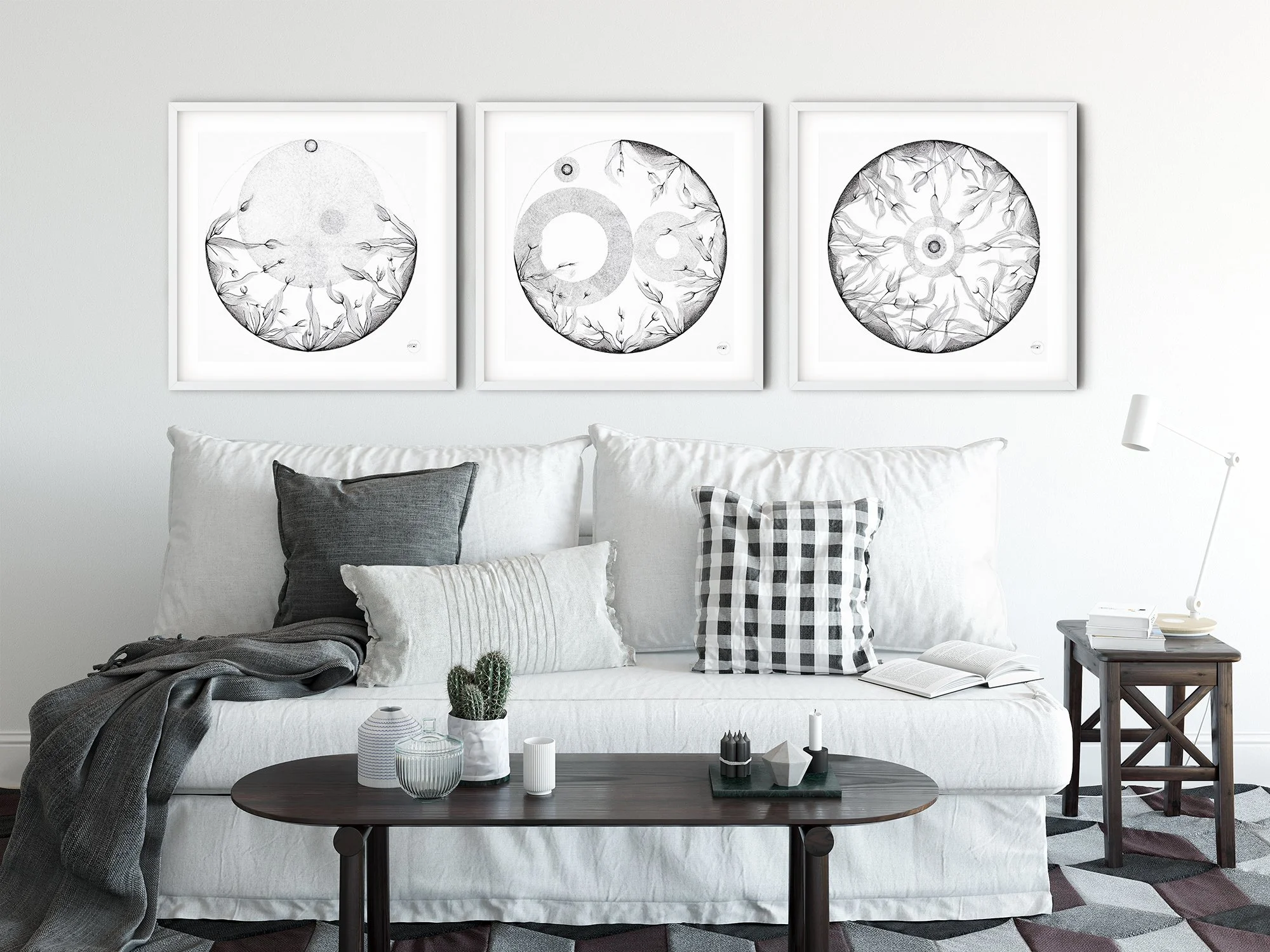
Related artwork: Transformation
A promise made in a tiny kitchen. Years later, bread arrives like theatre.
This is not English supermarket bread. This is not even “artisan bakery” Saturday treat bread. This is village bread: real sourdough, heavy in the hand, irregular holes, that slightly smoky smell when you bring it close to your face.
For a second I’m not in Stoke Mill. I’m back in my grandmother’s kitchen in the north of Poland. Wood stove on, windows steamed up, radio murmuring in the corner. I’m maybe eight, standing on a chair because the counter is too high. In front of me: a big clay bowl, thick cream, and a wooden churner almost as tall as I am.
“Just a little longer,” she says, and I keep beating until my arms ache. Suddenly the cream breaks and there it is: fresh butter, pale and solid, swimming in buttermilk. She presses it into shape with wooden paddles, carves a small cross on top, wraps it in cloth. The kitchen smells of warm bread, fresh butter and safety.
Stoke Mill’s butter isn’t made by my grandmother, but it might as well be. It has
the same quiet richness, the same this came from a real animal on a real field taste.
I put it on the bread and it sinks in immediately, leaving a glossy layer. First bite: crunch of crust, chewy sour crumb, butter melting into every pocket.
All the precise, clever dishes we’ve had so far were brilliant. Technically perfect, surprising, impressive.
But this… this goes straight under my ribs.
My daughter watches me and laughs.
“Is it that good?” she asks.
I nod, but I can’t explain without dragging an entire country, childhood and dead grandmother into this restaurant, so I just say:
“Yes. This is home.”
We finish the course slowly, treating each bite like it’s the last one. After that come more beautiful plates – something deconstructed, something smoked under a glass dome, something with foam that would make TV judges nod approvingly.
All excellent.
But when I think of that evening now, I don’t see the complicated dishes. I see my daughter’s face glowing in the kitchen light, and my own hands breaking that small loaf in half.
Michelin star, open kitchen, story-telling chef, perfect little works of edible art.
And the thing I’ll remember forever is the simplest course on the menu: bread and butter that opened a door straight back to a warm kitchen. And a woman who never heard of Michelin, but knew exactly how happiness should taste.
This is one selected scene from the book.
